Designing the MVP for Taxfix’s Expert Review service.
2021

Taxfix is a free, DIY tax-filing app used across Germany — filling the gap between doing your own taxes and paying someone else to. In 2021 the business set out to add a tier in between: DIY (do it yourself, Taxfix's core free product), DIWM (do it with me — a real expert reviews your return with you), and DIFM (do it for me — full-service filing, fully handled by someone else). The new line of services was called Assisted Tax Filing, with Expert Review as its first block. I joined at initial product conception as the sole product designer, in a team of one PM, five developers, plus legal and business leadership.
Two constraints shaped the project from day one:
A third, non-legal constraint sat alongside those: finding the balance between a tailored, human experience and something that could actually scale.
Expert Review was aimed at people whose life just got more complicated — moving countries, a change in marital status, a new baby — exactly the moments a self-serve flow starts to feel risky to get wrong.
I started as the sole product designer, alongside one PM, five developers, and legal and business leadership. As the project matured, the team grew to include two content designers (EN/DE), a service designer, and a qualitative researcher — I went from a team of seven to owning the user flow within a full design chapter: happy and unhappy paths, interaction design between screens, content-first pieces like the wizard carousels, gathering feedback from legal, business, and engineering, test protocols, proposing A/B tests, a clean handoff to engineering, and — post-launch — setting research objectives and prioritizing what came next.
The North Star was feedback delivered and actioned fully in-app — including a platform for reviewers to mark feedback natively in the declaration. For the MVP, I helped make a deliberate call to ship something rougher instead:
We were aware the PDF-plus-manual-changes flow wasn't optimal — but we chose it deliberately. It let us prove the process with the partner and gather the most real input from clients, with the in-app version as a deliberate next step, not a compromise we didn't notice. I even designed and shipped a small beta website — built in Webflow — so experts could generate that PDF report through a simple web form.
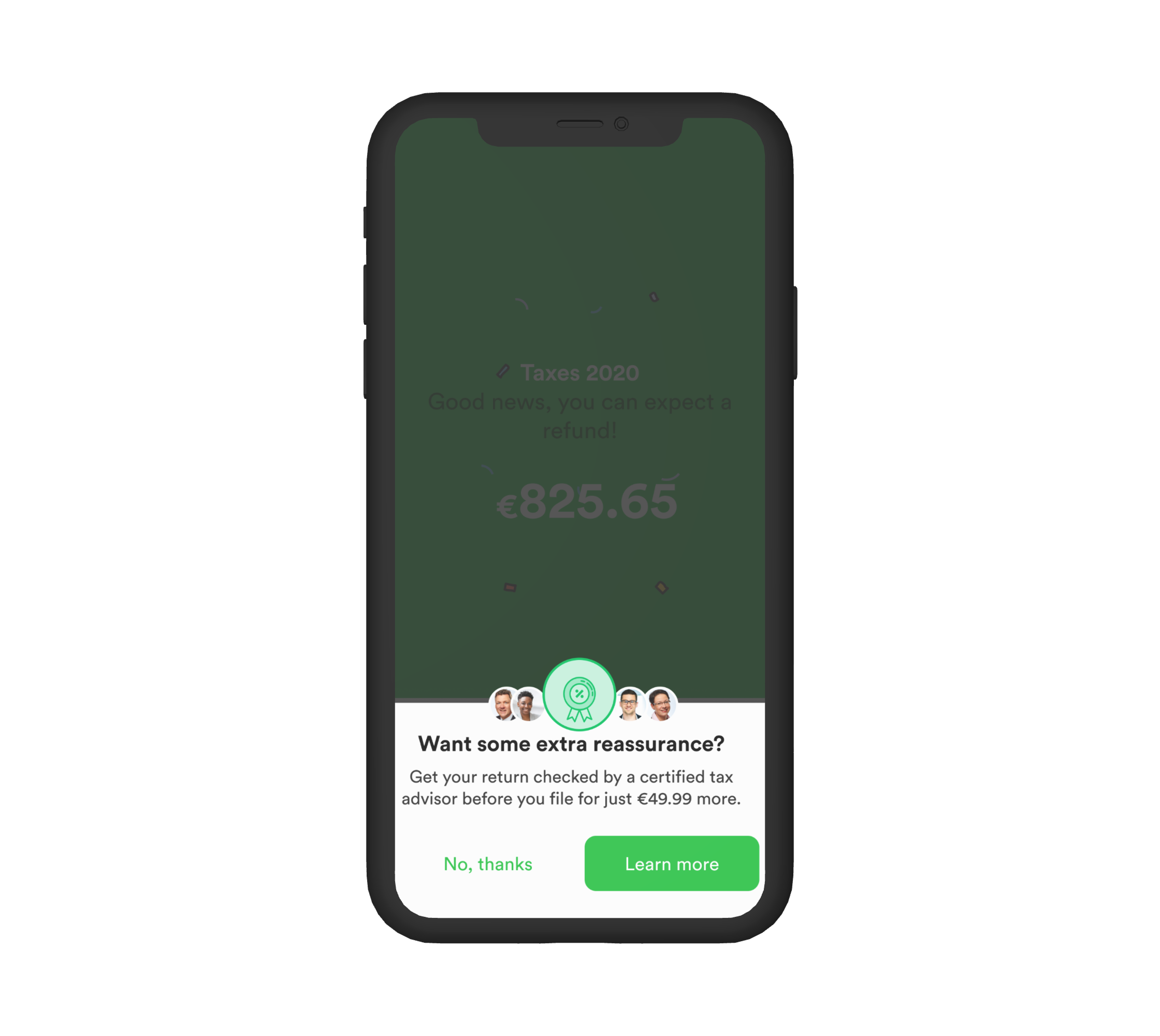
I mapped every point in the filing journey where Expert Review could realistically be offered, and shipped three, each with skip-logic so declining never blocked the core free product:
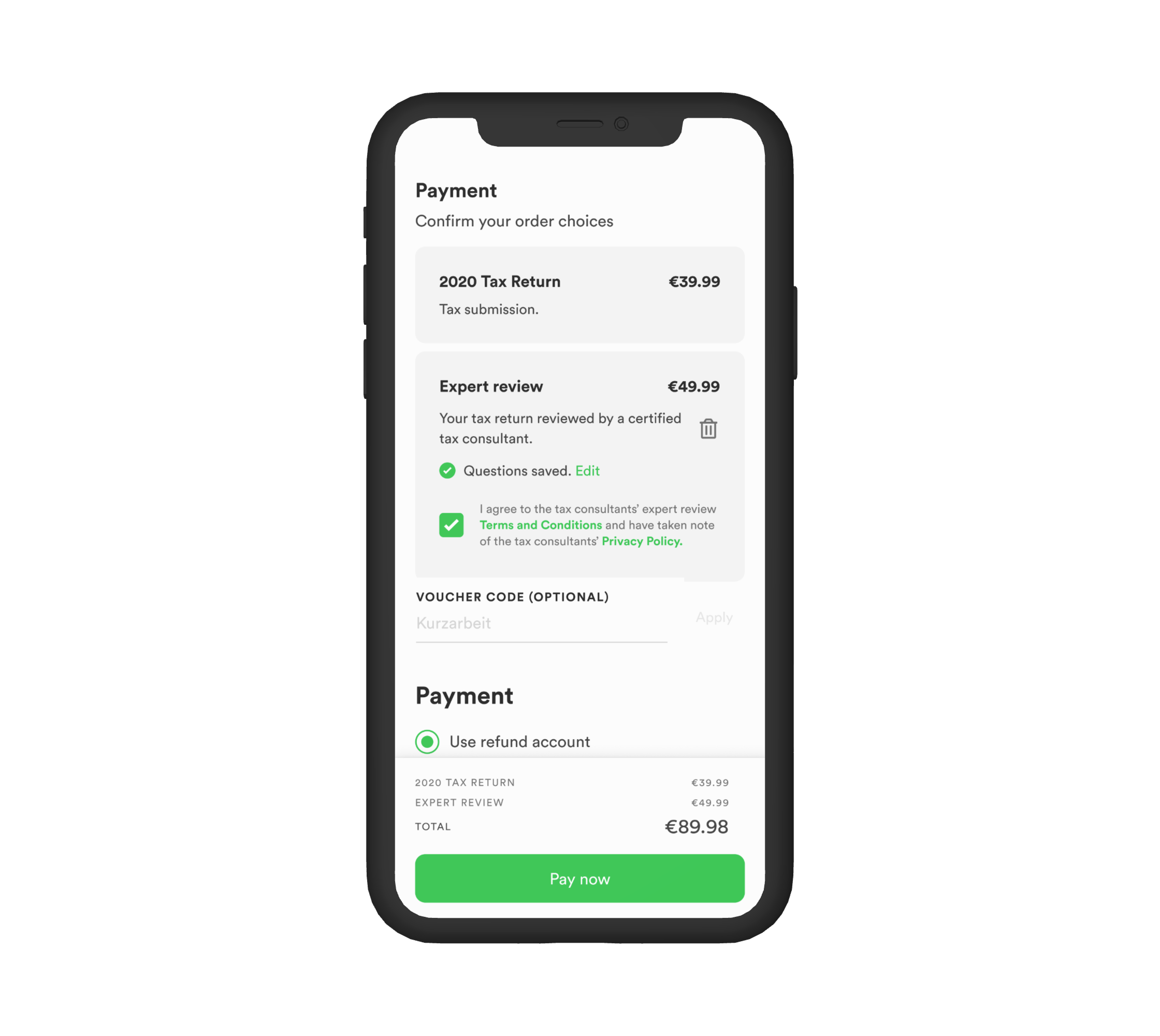
Discovery ran from a proof-of-concept workshop with the PM and business team through personas, concept tests, and a first flow, into mid-fi review with product and business leadership, iteration, an engineering walkthrough, high-fidelity flow, usability testing with severity-scored issues, and a clean Figma handover. Testing ran with a native German speaker ahead of launch, in the product's home market.
What shipped: a working MVP end-to-end — the opt-in flow, skip-logic across the entry points, the severity-tiered PDF mechanism, the beta expert platform, and a payment flow that correctly foregrounded our legally-required partner.
What I did after launch: I set post-launch research objectives, gathered MVP feedback, helped define our KPIs, and prioritized fixes for the next version.
